


Berlin through the ages
Berlin during the Middle Ages – from its foundation to about 1600
The city is first documented in 1237 as colony of marketeers and traders at a convenient intersection of the “Spree” (Mühlendamm). The double-colony Cölln and Berlin (union since 1307) grow on both riversides during the eastern extension of the German Empire and become a fortified city in the margraviate Brandenburg.
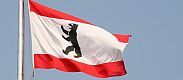
Berlin’s oldest building, the “Nikolaikirche” (Nikolai Church), is already built around 1230. In 1280 the bear first appears in the Berlin city arms.
Brandenburg becomes electorate in 1356. In 1360 Berlin joins the hanseatic lead, which stays mainly effectless and is closed in 1518 due to conflicts.
During the 15th century the “Hohenzollern” become electors in Brandenburg (1415) and start to build a castle in Berlin in 1443. In 1432 Berlin and Cölln unite, the elector canceled the corporate city council 10 years later.
In 1486 Berlin becomes the permanent residence city of the „Hohenzollern“. Around 1500 Berlin has about 12.000 inhabitants.
Berlin as royal seat until about 1800
During the 16th century Brandenburg belongs to the first countries joining the cristian reformation (1539/40). After the 30 Years War, which harried Brandenburg and Berlin, too, a consolidation succeeds during the 17th century under regiment of the “Great Elector” Friedrich Wilhelm I. A strong army helps the land to become independent. Thousands of reformed religious refugees, especially from France (Huguenots) and from Bohemia and the Palatinate join in the reconstruction. In 1671 the Jewish Community Berlin is founded.
In 1701 the Brandenburg elector crowns himself as "King in Prussia" in Königsberg (Kaliningrad) and celebrates a triumphal return to Berlin. In 1695 he orders to build the “Schloss Charlottenburg” (Charlottenburg palace) for his wife. Berlin has about 50.000 inhabitants.
In 1713 King Friedrich Wilhelm I. (“King of Soldiers”) starts to militarize the society and makes the country an European power.
In 1740 King Friedrich II. (“Friedrich the Great”) begins to reign in Berlin. The adherent of enlightenment orders to enlarge the palaces in Potsdam, Berlin and Rheinsberg. During his reign of more than 40 years Berlin grows and becomes a European metropolis. Famous buildings such as the “Zeughaus” (armory), the “Kronprinzenpalais” (crown prince palace), the “Opernpalais” (opera palace), the “Staatsoper” (State Opera House) or today’s “Humboldt University” develop in Berlin. Three Silesian Wars took their toll – about 150.000 people died – and the territory expanded. In 1764 the first German-speaking theater plays in Berlin.
Reigned by Friedrich Wilhelm II. (from 1786) Berlin continues to grow. Langhans d. Ä. builds the famous Brandenburg Gate. Liberalization (Hegel) follows and the common "Prussian Land Dominion" offers legal security.
In 1795 the first steam-engine from England is used in a Berlin textile factory.
Friedrich Wilhelm III. is crowned in 1797. Around 1800 Berlin has about 170.000 inhabitants. Napoleon conquers Prussia in 1806 at Jena/Auerstedt and occupies Berlin until 1808. The new Prussian city ordinance (Freiherr von Stein) is established in 1810, which allows Berlin autonomy. The University was founded in 1810 and serfdom was abolished.
From 1813 Prussia joins the "Wars of Liberation" with England and Russia and helps to beat Napoleon at Waterloo (1815). During the 1820’s the economical and technical advance leads to migration of numerous workers to Berlin. First tenements develop.
In 1830 Schinkel’s Old Museum opens on the “Museumsinsel” (museum island).
In 1838 Berlin gets its first railroad to Potsdam. In 1844 the Germanys first public zoo opens in Berlin.
In the middle of the 19th century Berlin and its bordering settlements have about 400.000 inhabitants. The growth of social neediness of the working population and a lack of political freedom lead to the Revolution of 1848. In March of 1848 dozens of demonstrating citizens are shot during an operation of police and military. The invasion of Prussian troops stops the civic-democratic revolt.
In 1861 annexation makes Berlin’s population grow to 550.000 and its size to 59 square kilometers.
Berlin as imperial capital until 1933
In 1871, after the war against France, the German Empire is reestablished, the Prussian King (Wilhelm I.) becomes emperor and Berlin therefore becomes imperial capital of Germany. In 1878 political freedom is restricted and the Social Democratic Workers Party which is based in Berlin is banned by the “Sozialistengesetz” (socialist law).
The street leading to Potsdam becomes the „Kurfürstendamm“ – a boulevard and center of the „New West“ favored by the rich and artists.
Science, research, art and economy blossom during the period of promoterism. Numerous internationally famous artists, scientists and businessmen live and work in Berlin.
Around 1900 Berlin and its bordering suburbs have about 2.5 mio inhabitants. Berlin is the world’s largest tenement-city. In 1902 the first subway station opens in Berlin. In 1906 jobless shoemaker Wilhelm Voigt puts on a dawdler’s uniform and occupies Köpenick’s city hall as the “Captain of Köpenick”. He arrests the mayor and disappears with the city treasury.
From 1914 – 1918, during the years of war, the metropolis’ supply collapses bit by bit. Hunger and adversity finally lead the masses in Berlin to a tie-up. In the fall of 1918, the revolution begins. On November 9th emperor Wilhelm II. resigns and Friedrich Ebert (SPD) takes over the affairs of state. Social democrat Philipp Scheidemann proclaims the free German republic. Karl Liebknecht (USPD) proclaims the free socialist German republic at the Berlin palace.
In January 1919 the leftist Spartacus-rebellion is put down bloodily. Free corps troops abduct Karl Liebknecht and Rosa Luxemburg on January 15th and kill them at the “Tiergarten”.
On March 13, 1920 parts of the “Reichswehr” (empire’s army) overthrow their break-up as ordered by the “Versailler Vertrag” (Versaille agreement) and proclaim the rightist conservative Wolfgang Kapp imperial chancellor. A general strike organized by SPD and KPD leads to the collapse of the Kapp-Putsch.
In October of 1920 7 cities, 59 country communities and 27 property districts are being suburbanized to Berlin by law and the city is divided into 20 districts. The population is now 3.8 million, the size 878 square kilometers. Berlin becomes Europe’s largest industrial city and turns out to be a cultural metropolis in the Twenties. Artists such as Otto Dix, Lionel Feininger, Bertolt Brecht and Arnold Zweig and Nobel Prize laureate Albert Einstein live and work in Berlin.
In 1923 inflation is at its peak level. In 1924 the „1. Große Deutsche Funkausstellung“ (first big German radio exhibition) inaugurates on the fairgrounds. In 1926 the first “Grüne Woche”(agricultural exhibition) takes place. In August of 1928 the debut performance of “The Threepenny Opera” by B. Brecht occurs in the theater at the “Schiffbauerdamm”. About 150 daily and weekly papers are released in the city. The global economic crisis seizes Berlin in 1929. There are 450.000 people jobless in February. Demonstrations and riots occur. By the end of 1932 the number of unemployed people was at 630.000. Berlin’s streets are settings of encounters of left and right wing extremists, dead and injured people are the result. At the parliament elections on November 6th the NSDAP again becomes the strongest parliament party despite loss. In Berlin the NSDAP reaches a percentage of votes of 25.9 percent.
Berlin under the Nazi-regime
With the election of Hitler as imperial chancellor in 1933, the democracy’s abolishment starts. The parliament burns down, the mandates of communists and social democrats are annulled. The book burning takes place in Berlin and the first “KZ” (concentration camp) is set up in “Sachsenhausen” near Berlin.
In 1934/35 all elected bodies are dissolved. Administration is politically aligned. Disagreeable executives, employees and workers are discharged. In August of 1936 the 11th “Olympic Summer Games” take place in Berlin and are completely abused to make propaganda for the NS-regime.
On November 9, 1938 SA- and SS-members burn down nine of the twelve synagogues in Berlin, despoil Jewish shops and terrorize Jewish citizens during the so-called “Night of Broken Glass”. Until 1941 90.000 of the 160.000 Jews living in Berlin in 1933 can take refuge to a foreign country. More than 60.000 are killed in concentration camps and ghettos. About 1.400 Jews are rescued by brave Berliners and survive legally.
On September 1, 1939 the Second World War is started from Berlin with a declaration of war to Poland. On January 20, 1942 the organization of the “final solution of the Jewish question” is concluded at the so-called “Wannsee-Konfrerenz” (Wannsee-Meeting) and thus the industrial-like killing of all European Jews. Today a memorial place and an educational establishment are located in the “Wannsee-Villa”. As a result of the defeat of the German army at Stalingrad in January 1943 imperial propaganda minister Joseph Goebbels proclaimed the “Total War” in Berlin on February 18. During the fall Anglo-American armed forces start carpet bombing in the city. About 1 million inhabitants are evacuated until the end of the war. More than 50.000 loose their lives and up to 40 % of all buildings are destroid.
On July 20, 1944 colonel Claus Earl Schenk of Stauffenberg’s attempt to assassinate Hitler fails. Arrests and summary executions are the result. Stauffenberg and close complices are shot in the “Bendlerblock” in “Tiergarten”, the building belonging to the supreme command of the “Wehrmacht” (armed forces). There is a memorial place in Stauffenbergstraße now .
On April 21, 1945 the “Schlacht um Berlin” (battle about Berlin) starts, the „Rote Armee“ (red army) of the Soviet Union exceeds the city’s boarder. The battle ends with Hitler’s suicide on April 30th and the end of all combat operations of the “Wehrmacht” in Berlin on May 2nd. In the evening of Mai 8th Germany’s official surrender is declared in front of deputies of the allied forces in the “Wehrmachtskaserne” (armed forces’ barracks) in Berlin-Karlshorst.
Berlin from World War II to the city’s division
According to an agreement of the allies of the Anti-Hitler-Coalition the city is divided into four sectors and is administrated by all 4 occupying powers together; the USA, Great Britain, France and the Soviet Union.
A growing conflict of interests of the winning forces between 1946 and 1949 leads a failure of this administration. Berlin becomes focal point of the “Cold War”. The Soviet Union activates a blockade of the western sectors (June 1948 – May 1949) due to the currency reform in the west. The western allies react by starting an airlift – an unexampled way of supplying the western city through the air.
Starting in September, the city council meetings take place in the western part of Berlin. Thereupon, a magistrate dominated by the SED forms in East Berlin on November 30th. Thus the city’s division has taken place.
On December 4, 1948 the “Freie Univeristät Berlin” (Free University of Berlin) is founded in West Berlin analogue to the “Humboldt University” (1949) in the eastern part.
In 1949 West Berlin’s city council and mayor decide to “provisorily” accommodate themselves in Schöneberg’s city hall for more than the following 40 years. On May 23, 1949 the “Bundesrepublik Deutschland” (Federal Republic of Germany) is founded in the western zones with Bonn as capital. Berlin’s allied special status stays valid until the German reunification on October 3, 1990. With the foundation of the “Deutsche Demokratische Republik” (German Democratic Republic - GDR) in the eastern zone on October 7, 1949 East Berlin becomes “Hauptstadt der DDR” (capital of the GDR).
In September 1950 the blasting of the Berlin city palace at the palace squere in the city center starts as „symbol of the Prussian feudalism”.
In January 1952 West Berlin gets a legitimate claim for financial help as maintenance of life by federal law. In February the enlargement of “Stalinallee” (since 1961 Karl-Marx-Allee) starts in East Berlin as a “National Development Program” and makes the “Stalinallee” become Germany’s first “socialist street”.
On June 16, 1953 workers start a tie-up at the „Stalinallee“, demonstrating against the governmental enhancement of standards. This led to a rebellion on June 17, which also encroached to other cities of the GDR and peaks in the request of free elections. Soviet troops put down the rebellion forcibly.
In March 1954 the “Berlin Assembly” enters the theater at the “Schiffbauerdamm” in Berlin’s district “Mitte” conducted by Bertolt Brecht.
As a highlight of reconstruction the international construction exhibition takes place in West Berlin in 1957. Core piece is the modern style “Hansaviertel” at the “Tiergarten” – parallel to the “socialist buildings” at the “Stalinallee”.
In East Berlin the restored „Neue Wache“ (new guard house) at “Unter den Linden”, built by Karl-Friedrich Schinkel in 1818, opens again in August. Since 1993 the „Neue Wache“ is „Central Memorial Place of the Federal Republic of Germany“.
On October 3, 1957 Willy Brandt (SPD) becomes mayor of West Berlin. He stays mayor until December 1966.
On June 18, 1959 Federal President Theodor Heuss (FDP) officially makes the “Bellevue Castle” in the “Große Tiergarten” his (second) office.
Due to the increasing number of sanctions in the GDR (collectivization of agriculture) nearly 200.000 GDR-inhabitants refuse across the open sector boarder to West Berlin in 1960.
Berlin – separated by the Wall until the “Wende” (reunification)
On August 13, 1961 the GDR starts to build a wall along the sector boarders and seals off the western part of the city from the eastern part and the suburbs.
From 1962 on the center of “GDR’s capital” around “Alexanderplatz” and “Marx-Engels-Platz” develops to be representative: “Haus des Lehrers” (teacher’s house), “Kongresshalle” (congress hall), “Fernsehturm” (television tower), “Centrum-Warenhaus” (center warehouse) and hotel “Stadt Berlin” as well as the state council building and the foreign ministry (torn down in 1995) are built.
US-President Kennedy visits the city on June 26, 1963 and assures his solidarity to the citizens of Berlin in his famous speech. In December the first “permit treaty” is signed which allows the citizens of West Berlin to visit the eastern part of the city.
Student Benno Ohnesorg is shot by a policeman during a demonstration against the visit of the shah of Persia in West Berlin on June 2, 1967. The “parliament external opposition” (APO) develops – against the old educational system, a lack of coping with the “Nazi-past”, the political torpidity of the great coalitions and the unfairness of the international economic order. The assassination of student leader Rudi Dutschke on April 11, 1968 shows another dramatic peak of this conflict.
The „Neue Nationalgalerie“ (new national gallery, Mies van der Rohe) opens in West Berlin.
On October 21, 1969 Willy Brandt (SPD) is elected Federal Chancellor. He emphasizes that he is willing to start a bargain between the two German states.
On September 3, 1971 ambassadors of the four winning forces sign the “Vier-Mächte-Abkommen” (four power agreement) of Berlin which defines the ties between West Berlin and the Federal German Republic and practical solutions in favor of the people. In December the senate of Berlin and the GDR-government sign the “agreement of easing and advancement of the tourist and visitors travel”.
In 1972 FRG and GDR draw up a basic treaty with which Berlin is included in the relaxation process.
In 1973 the rebuilding of the Berlin Dom (destroyed during the war) on the “Spreeinsel” in East Berlin’s district “Mitte” starts and ends in 1993.
In spring of 1976, the building of the GDR’s largest real estate project starts in East Berlin’s district “Marzahn”. 62.000 apartments are built with slab-construction. The “Schlossplatz” in “Mitte” and the “Palast der Republik” (republic’s palace) are also opened in 1976. Closed after the “Wende” (reunification) in 1990, the demolition starts in 2006 in order to rebuild the city’s castle as Humbolfd-Forum for the state-museums of Berlin.
Starting in 1979 three new districts are founded in East Berlin surrounding the development area: Marzahn, in 1985 Hohenschönhausen and Hellersdorf in 1986.
On April 2 the “International Convention Center” (ICC) opens at the “Messegelände” (fair grounds) in West Berlin.
The “Schinkelsche Schauspielhaus” (theater) at the “Platz der Akademie” in East Berlin’s district “Mitte” which had been destroyed during the war is reopened on October 1, 1984 after its reconstruction (now “Konzerthaus Berlin” - concert hall - at the “Gendarmenmarkt”).
From April to October 1985 the “Bundesgartenschau” (German Federal Garden Show, now BUGA-Park in Britz) takes place in West Berlin’s district “Neukölln”.
Efforts to celebrate Berlin’s 750th anniversary in 1987 together fail. Both parts of the city organize their own events. Constructional highlight in East Berlin’s center is the completion of the “Nikolaiviertel’s” replica.
The second “International Construction Exhibition” takes place in West Berlin themed “gentle urban regeneration”. On November 10,1988 the symbolic laying of the foundation stone for the rebuilding of the “New Synagogue” at the “Oranienburger Straße” in East Berlin’s district “Mitte” takes place.
In 1989 the GDR-government gets more and more under pressure by the growing civil movement and the demand for reforms. On October 7 the GDR celebrates its 40th anniversary in East Berlin. Demonstrations expressing demands for reforms and freedom of opinion are put down violently. Many people are arrested.
At the SED’s ZK-conference on October 18 Erich Honecker proclaims his retirement from all charges due to “health problems”. Egon Krenz becomes his successor.
On November 4th more than 500.000 citizens of East Berlin gather to demonstrate at “Alexanderplatz”: They demand freedom of opinion, press and assembly. Due to the masses’ pressure, the GDR opens the Berlin Wall and the inner German boarders on November 9th.
New Berlin
On March 18, 1990 free elections of the “Volkskammer” (parliament) take place in the GDR. In May, free elections of East Berlin’s city council follow. The winning forces of World War II and both German states draw up the “2+4-contract” which arranges the reunification and gives Germany full sovereignity. Berlin’s “four-power-status” expires. Germany’s reunification is proclaimed during an act of state in Berlin on October 3rd. Germany’s reelections take place in October.
On June 20, 1991 the Federal Diet resolves to relocate government and parliament to Germany’s capital Berlin. In the course of the same year the governing mayor and the senate’s office move back into Berlin’s city hall (“Rotes Rathaus”, red city hall) in “Mitte”. Since 1993 the Berlin House of Representatives has found its place in the building of the former Prussian parliament.
In the summer of 1994 the American, British, French and Russian troops leave Berlin and celebrate their goodbye with parties and parades.
On October 22, 1995 the Berlin constitution is accepted by more than 75 % of the submitted votes. The extension of enforceable basic rights and the enhancement of the catalogue of national objectives (right to work, education and housing space) are new to the constitution. Environmental protection and data security also elevated to constitutional status. Elements of a direct democracy such as referendum extend the citizens’ rights.
In April of 1999 the Federal Diet meets in the “Reichstag” (designed by architect Sir Norman Foster) for the first time after reconstruction. Federal ministry and parliament start to work in their Berlin offices. The “Bundesrat” (upper house of German parliament) moves from Bonn to Berlin. The embassies of numerous states open in Berlin; the Federal States open their capital offices.
With the completion of the new Federal Chancellery in May of 2001 the relocation of the Federal Diet and the Federal Government is complete. The “Jakob-Kaiser-Haus” for members of the Bundestag and the “Paul-Löbe-Haus” for the parliament board as well as the “Marie-Elisabeth-Lüders-Haus” as parliament library are handed over at the “Reichstag”.
During the following years further historic buildings such as the Brandenburg Gate, the „Zeughaus“ (armory), the „Kommandantur Unter den Linden” (headquarters), the Charlottenburg Gate etc. are restored, rebuilt or extended.
A modern metropolis center has formed at the “Potsdamer Platz”, a frame joint between East and West Berlin located at “Daimler-City” and “Sony-Center” and near the “Kulturforum” (culture forum).
The Jewish Museum in Berlin opens in 2001, the Holocaust Memorial Place in Berlin’s center was handed over to public in 2005.
In 2006 the new Berlin central station is completed, the first central connecting station in the transportation history of Berlin.
The reconstruction of the “Museumsinsel” (museum island) goes forward.
Links
›› Berlin online www.berlin.de
›› Nice accomodations in Berlins largest district



Overnight stays

29.04.11
Köpenicker Winzerfest
...mehr
|
||
29.04.11
Treptower Hafenfest
...mehr
|
||